
What started as an occasional scratching sound above the ceiling turned into an unexpected home repair project involving squirrel removal, attic damage, and the importance of preventing wildlife from returning.
A Strange Sound That Was Easy to Ignore
For one Sacramento homeowner, the first sign of trouble was so subtle that it barely seemed worth investigating. Every so often, usually in the early morning, there was a faint scratching sound coming from somewhere above the ceiling. The homeowner initially assumed it was a tree branch rubbing against the roof or perhaps the normal creaking and settling that happens in older houses.
Living in a Sacramento neighborhood with mature trees, shaded streets, and plenty of backyard wildlife, seeing squirrels running along fences and jumping between branches was nothing unusual. In fact, squirrels were a familiar sight around the property. The homeowner had watched them chase one another through the backyard for years without ever considering that they might become a problem.
But over the following weeks, the noises became more noticeable. What began as occasional scratching developed into the unmistakable sound of something running across the attic. Sometimes there was a brief scuffling noise, followed by what sounded like chewing or gnawing. Other times, the activity would stop completely, leaving the homeowner wondering whether there was really an animal up there at all.
At first, the homeowner suspected mice or rats. After all, rodents are known for finding their way into attics and crawl spaces. Squirrels never really crossed their mind. Those were the animals playing in the trees outside, not something they expected to find living above their ceiling.
Unfortunately, that assumption was about to change.
Searching Google and Asking Neighbors on Nextdoor
As the noises continued, the homeowner decided to do a little investigating. A few Google searches for phrases like “scratching noises in attic during the day” and “animals running across ceiling Sacramento” produced several possibilities, including rats, mice, birds, and squirrels.
One detail stood out. Unlike rats and mice, which are generally most active after dark, squirrels are typically active during daylight hours. The homeowner realized that many of the noises were happening shortly after sunrise and again in the late afternoon, when squirrels were often seen moving around the backyard.
Still uncertain, the homeowner turned to Nextdoor, the neighborhood social networking platform, to see whether anyone nearby had experienced something similar. The post described the running and scratching sounds, the occasional chewing noises, and the fact that most of the activity seemed to happen during the day.
Several neighbors responded with stories about squirrels getting into their attics. One neighbor described how squirrels had damaged a roof vent, while another mentioned discovering a nest inside the insulation after hearing similar noises for several weeks. Multiple recommendations pointed toward Thomas Wildlife Control & Roofing, a local company providing Sacramento squirrel removal, attic restoration, roofing repairs, and wildlife exclusion services.
After reading the recommendations and learning that the company could help address both the animals and the damage they might have caused, the homeowner decided to schedule an inspection. The hope was that Thomas Wildlife Control & Roofing would find a single squirrel and a small entry point that could be quickly repaired.
The actual findings were considerably more involved.
The Inspection Revealed a Squirrel Nest and Hidden Attic Damage
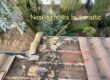
When Thomas Wildlife Control & Roofing inspected the property, the technician discovered evidence that squirrels had been using the attic as a nesting area. The animals had found an opening near the roofline and were moving between the attic and the trees surrounding the home.
The homeowner was surprised to learn how easily squirrels can exploit weak spots in a roof. A small gap around a vent, damaged fascia board, or deteriorating roofing material can provide an opportunity for an animal to begin chewing and enlarging an opening. Once squirrels find a protected attic space, they may continue using it as shelter and a place to raise their young.
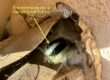
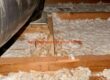
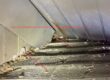
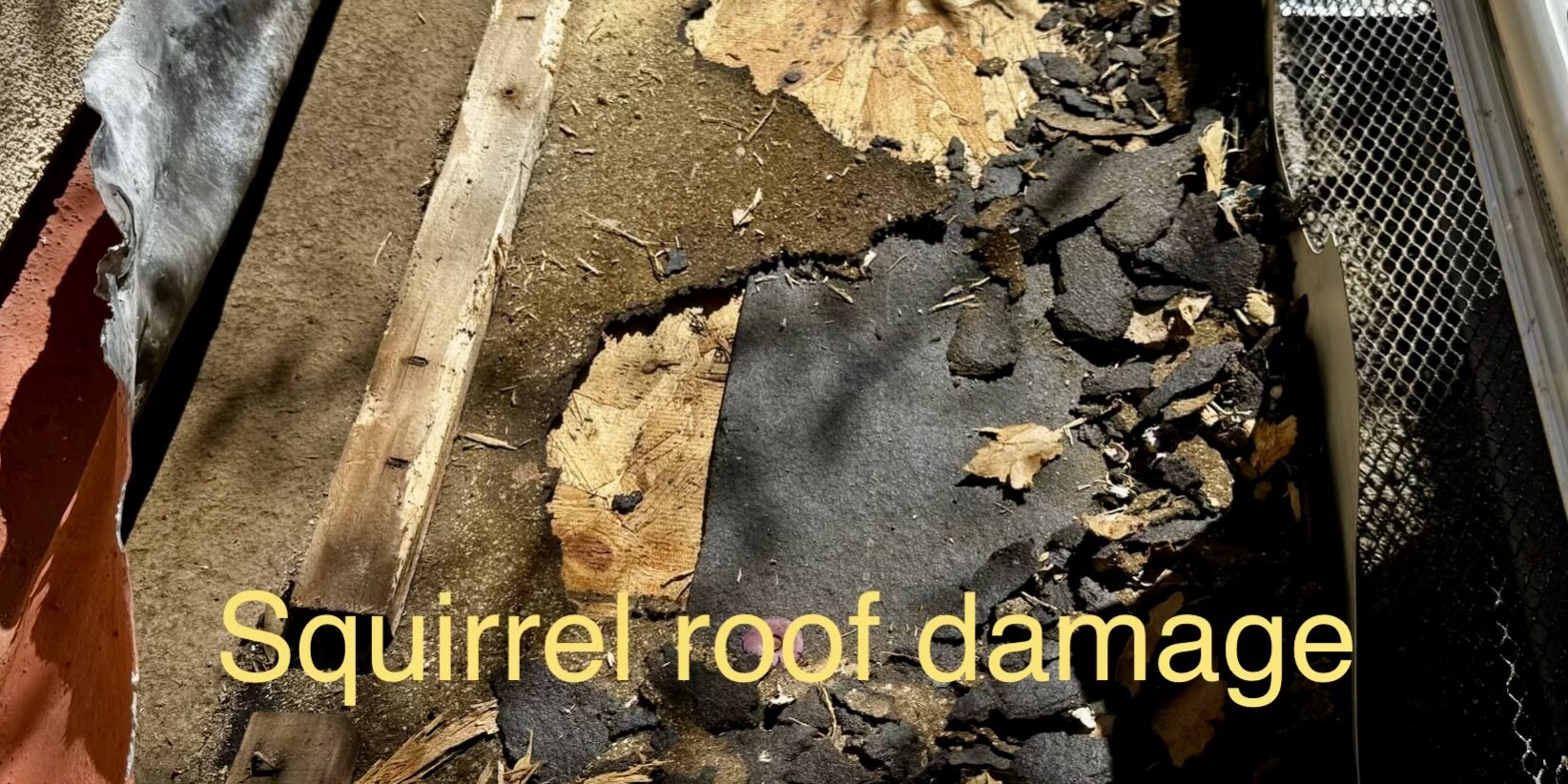
Inside the attic, the inspection revealed disturbed insulation, nesting materials, droppings, and evidence of chewing around building components. Portions of the insulation had been compressed or displaced, reducing its effectiveness. The entry point also needed attention because the squirrels had damaged surrounding materials while moving in and out of the structure.
The technician explained that squirrels have powerful front teeth that grow continuously, which is why they regularly chew on materials. Unfortunately, when squirrels live inside a home, that chewing can damage wood, plastic, roof components, and even electrical wiring insulation. Damaged wiring can create potentially dangerous conditions and should be evaluated by a qualified electrician.
For the homeowner, the inspection was an eye-opening experience. The problem wasn’t simply the noise. The squirrels had been living inside the attic long enough to create damage that would require cleanup and repairs. What seemed like a harmless nuisance had become a home maintenance issue that needed professional attention.
Why Sacramento Homes Are Vulnerable to Squirrel Infestations
Sacramento provides an attractive environment for squirrels, particularly in established neighborhoods with mature trees, landscaped yards, and nearby parks or greenbelts. Areas such as East Sacramento, Land Park, Curtis Park, and other tree-lined communities offer plenty of opportunities for squirrels to travel between properties and reach rooftops.
While squirrels are a normal part of the outdoor environment, their behavior can become destructive when they begin nesting inside residential structures. Attics provide protection from weather and predators, along with a relatively quiet space where squirrels can shelter and raise their young.
Squirrels are excellent climbers and can reach rooftops using tree branches, fences, utility structures, and exterior walls. Once on a roof, they may investigate damaged vents, deteriorating fascia boards, gaps around eaves, or openings near chimneys and other roof penetrations. Even small vulnerabilities can become larger when squirrels chew at surrounding materials.
Homes with branches extending close to the roof may be especially accessible, although squirrels don’t necessarily need direct tree access to climb onto a structure. Regular roof maintenance, trimming vegetation where appropriate, and inspecting vulnerable areas can help reduce opportunities for wildlife intrusion.
The challenge is that most homeowners rarely inspect the difficult-to-see areas of their roofline. By the time they hear activity inside the attic, squirrels may already have established a regular entry route and begun nesting.
Warning Signs That Squirrels May Be Living in Your Attic
One of the most important lessons from this Sacramento homeowner’s experience was that unusual noises shouldn’t automatically be dismissed as normal house sounds. Squirrels often provide several warning signs before homeowners realize an infestation has developed.
Running or scratching noises during daylight hours are among the most common indicators. Homeowners may hear quick footsteps, scuffling, or repeated movement across the ceiling, particularly in the morning and late afternoon. Chewing sounds may also occur as squirrels work on nesting materials or gnaw on building components.
Outside the home, squirrels repeatedly visiting the same section of roof can provide another clue. If an animal regularly disappears beneath a roof edge, into a vent, or through a gap near the eaves, it may have found an entry point into the attic. Visible damage to fascia boards, soffits, vents, or roofing materials can also suggest ongoing animal activity.
Inside the attic, signs may include disturbed insulation, nesting debris, droppings, and unusual odors. In more serious cases, squirrels can damage electrical wiring insulation or create openings that allow rainwater and moisture to enter.
Because rats, mice, birds, and other animals can create similar symptoms, a professional inspection is often the best way to identify the species involved, locate the entry points, and determine the extent of the damage.
The First Step Was Humane Squirrel Eviction
Once the squirrels were identified, Thomas Wildlife Control & Roofing developed a plan to remove them safely and address the conditions that allowed them to enter the attic. The first priority was humane wildlife eviction, an important step because squirrels may have dependent young inside a nesting area.
Wildlife professionals must assess the situation before sealing entry points or installing exclusion devices. Closing an opening while animals remain inside can trap them, create additional damage, or separate young squirrels from their mother. Appropriate removal methods depend on the animals present, their behavior, and the location of the nesting area.
The goal was to resolve the wildlife activity without creating additional problems inside the home. Once the squirrels had been removed and the attic was confirmed clear, the team could move forward with cleanup, repairs, and preventive exclusion.
For the homeowner, this was an important distinction. Simply making the scratching sounds stop wasn’t enough. The squirrels needed to be removed safely, and the home needed to be protected against future intrusions.
Attic Cleanup and Repairs Revealed the Full Scope of the Problem
With the wildlife activity resolved, attention shifted to the damage left behind. The attic contained nesting debris and areas of disturbed or contaminated insulation that needed to be addressed. Animal droppings and other contaminated materials require appropriate handling because improper cleanup can expose homeowners to airborne particles and other sanitation concerns.
Thomas Wildlife Control & Roofing coordinated the cleanup of the affected attic areas and assessed the insulation that required removal or replacement. Restoring damaged insulation is important not only for cleanliness but also for maintaining the home’s energy efficiency and indoor comfort.
The inspection also identified areas around the roofline that required repairs. The squirrels had taken advantage of vulnerable materials near their entry point, and those openings needed to be properly secured. Leaving them unrepaired would create an opportunity for squirrels or other wildlife to return, potentially starting the entire problem over again.
The homeowner had originally expected a quick wildlife removal appointment. Instead, the project involved several interconnected services, each necessary to resolve a different aspect of the infestation.
Why Professional Roof Repairs and Wildlife Exclusion Matter
One of the biggest advantages of working with Thomas Wildlife Control & Roofing was having a company capable of coordinating wildlife removal and roofing repairs. Many pest control or wildlife removal providers specialize in trapping and eviction but may not have the licensing or expertise required to repair damaged roofing systems.
In California, roofing work generally falls under the C-39 Roofing contractor classification established by the Contractors State License Board. This distinction is important because roof repairs must be completed using appropriate materials and installation methods to preserve the integrity of the roofing system and prevent future leaks or moisture intrusion.
For homeowners researching squirrel removal Sacramento services, it’s important to choose a company that can address more than just the animals themselves. Thomas Wildlife Control & Roofing offers the advantage of coordinating humane wildlife eviction, attic cleanup, insulation replacement, professional roof repairs, and exclusion work under one roof. This comprehensive approach helps homeowners resolve the infestation, repair the damage, and reduce the likelihood of squirrels returning.
For the Sacramento homeowner, having one company coordinate the wildlife removal, attic cleanup, roof repairs, and exclusion work simplified what could have become a complicated process involving multiple contractors. Instead of hiring one company to remove the squirrels and another to repair the damage, the work could be organized as part of one comprehensive project.
The final stage involved wildlife exclusion, which focuses on identifying and securing vulnerable access points to reduce the likelihood of animals returning. Depending on the property, this may include reinforcing vents, repairing damaged fascia or soffits, sealing appropriate structural gaps, and addressing other areas where squirrels could potentially enter.
Proper exclusion work is particularly important because squirrels may attempt to return to familiar nesting locations. Removing the animals without repairing the openings that allowed them inside often leaves a home vulnerable to recurring problems.
The goal is not simply to eliminate the current infestation, but to provide homeowners with a more complete and lasting solution.
Why Ignoring Squirrels in Your Attic Can Become Expensive
It’s easy to underestimate the damage squirrels can cause. They’re small, familiar animals that most people associate with backyard trees and neighborhood parks. But when squirrels move into an attic, their nesting and chewing behaviors can lead to problems that extend well beyond the inconvenience of hearing noises overhead.
Disturbed or contaminated insulation can reduce energy efficiency and require professional replacement. Chewed wood and roofing materials may create openings for additional wildlife or moisture intrusion. Electrical wiring damage can introduce safety hazards,