
Hearing an occasional noise in the ceiling can be easy to dismiss. Homes make sounds, especially at night. But when those noises become more frequent — scratching, chewing, scurrying, or movement overhead — they can be a warning that wildlife has found a way inside.
That is exactly what happened to one Placer County homeowner who was caught by surprise by the extent of a squirrel problem hiding above his ceiling.
What initially sounded like a small nuisance turned out to be a much larger issue involving nesting activity, damaged roofing materials, and multiple openings leading directly into the attic.
Fortunately, the homeowner acted before the damage became even worse.
It Started With Noises in the Ceiling
Like many wildlife problems, there wasn’t an obvious sign at first.
The homeowner began noticing unusual sounds coming from the ceiling and attic area. The noises weren’t constant, but they happened often enough that he started wondering whether an animal had gotten into the home.
Squirrels are particularly good at exploiting weak areas around a roof. Small gaps, deteriorated roofing components, vents, fascia boards, soffits, and other vulnerable areas can become entry points. Once squirrels establish themselves inside an attic, they may begin nesting, chewing, and expanding those openings.
The homeowner knew something wasn’t right, so instead of ignoring it, he started looking for help.
Finding a Local Wildlife Control Company on Nextdoor
The homeowner turned to Nextdoor.com to see who people in the community recommended.
When you’re dealing with wildlife in an attic, simply trapping or removing the animal isn’t always enough. You also need to determine how the animal entered the home and what needs to be repaired to keep it from coming back.
After reviewing local recommendations, the homeowner contacted Thomas Wildlife Control & Roofing, a Placer County-area company experienced in wildlife removal, exclusion work, and repairs associated with animal damage.
If you’re currently dealing with similar activity and looking for professional Rocklin squirrel removal, having the entire property inspected can help identify both the animals and the conditions that allowed them inside.
The homeowner scheduled an inspection.
It didn’t take long to uncover the problem.
The Damage Was Much More Extensive Than Expected
Within minutes of examining the roof, the Thomas Wildlife Control & Roofing team found evidence explaining exactly what the homeowner had been hearing.
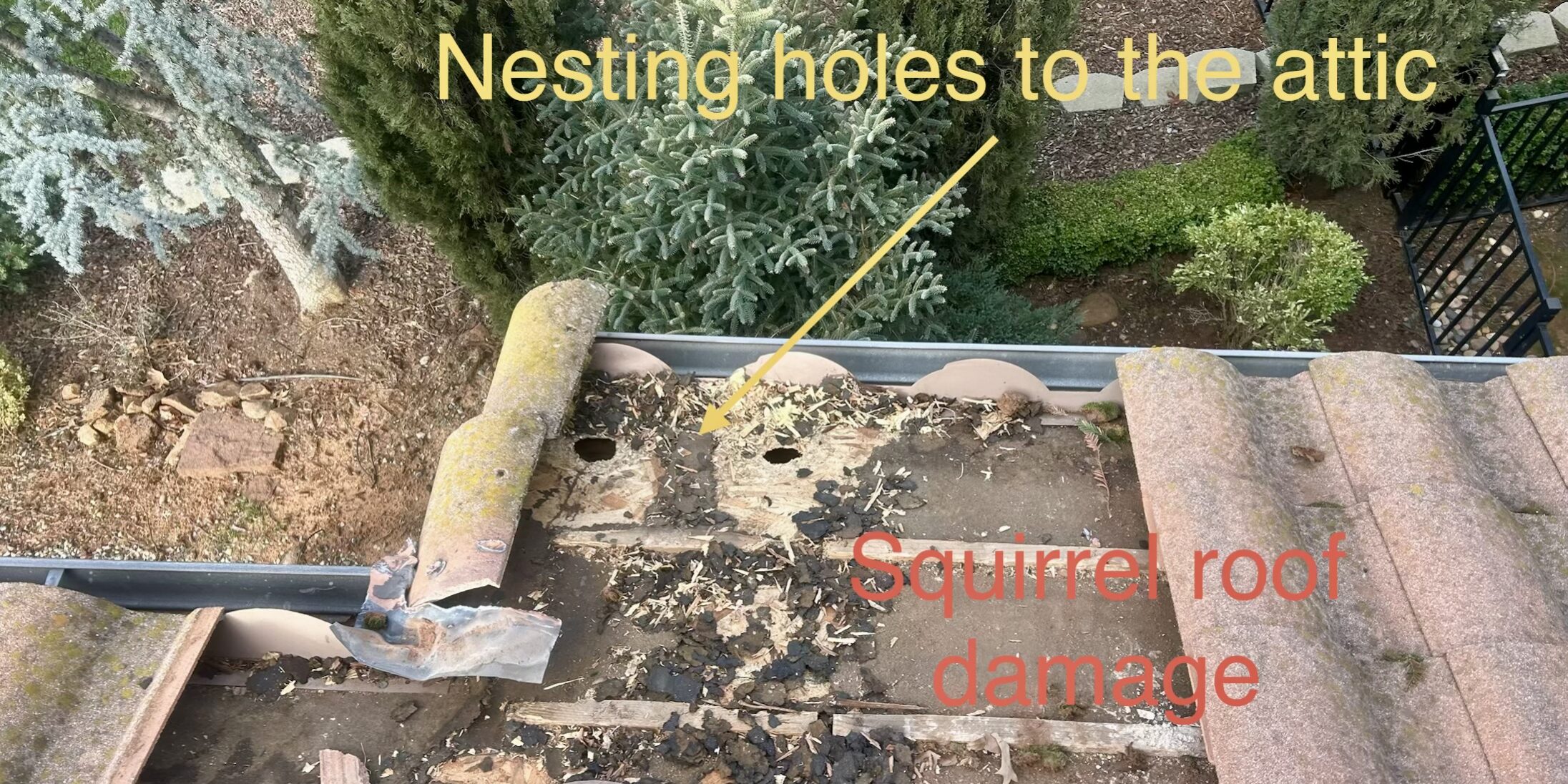
The squirrels had established nesting areas around the roof and created openings that provided access to the attic.
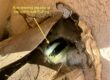
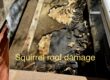
As the photo from the property shows, portions of the roofing area had sustained significant damage. Several openings were visible, along with chewed and deteriorated materials around the nesting area.
What sounded like relatively harmless scratching from inside the house was actually evidence of a much more serious problem occurring above the ceiling.
And that’s one of the biggest challenges with attic wildlife problems: homeowners often can’t see the damage from the ground.
A squirrel can be active inside an attic for some time before the homeowner realizes how extensive the problem has become.
Why Squirrels Can Cause Significant Roof and Attic Damage
Squirrels aren’t trying to damage your home. They’re simply looking for shelter, nesting space, and protection.
Unfortunately, their natural behavior can be destructive.
Squirrels are rodents, which means they have teeth that continually grow and must be worn down through chewing. Once squirrels gain access to a roof or attic, they may chew on wood, roofing materials, vents, fascia, insulation, or other components.
They may also enlarge an existing opening to make entry easier.
Over time, a small vulnerability can turn into a much larger repair.
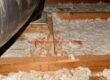
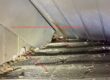
The nesting material squirrels bring into an attic can create additional problems, and repeated activity may damage insulation or contaminate sections of the attic.
That’s why addressing both the wildlife and the entry points is so important.
Wildlife Removal Is Only Part of the Solution
Getting squirrels out of the attic solves the immediate problem.
Keeping them from returning solves the long-term problem.
A comprehensive squirrel control strategy generally includes identifying the entry points, removing or excluding the animals, and securing vulnerable areas of the structure.
This is commonly referred to as exclusion work.
Wildlife exclusion is designed to prevent squirrels and other animals from simply coming back through the same opening after removal.
That distinction matters.
If the animals are removed but the original hole remains, another squirrel — or an entirely different animal — may discover the opening later.
Thomas Wildlife Control & Roofing can address both sides of the problem: wildlife removal and repairs to damaged areas of the home.
That can be especially helpful in cases like this one, where the squirrels caused visible roof damage in addition to entering the attic.
Don’t Wait When You Hear Something in the Attic
One of the biggest lessons from this Placer County homeowner’s experience is simple:
If you think something is living in your attic, investigate it sooner rather than later.
A strange sound doesn’t automatically mean you have a major wildlife problem. But persistent scratching, chewing, running, or movement inside the ceiling or walls shouldn’t be ignored.
The longer an animal remains inside the structure, the greater the opportunity for additional damage.
A relatively small entry point may become larger. Nesting activity can expand. Roofing materials may deteriorate further. Insulation can become disturbed. And what could have been a straightforward exclusion job can eventually become a more extensive repair project.
Early intervention can make a significant difference.
Watch for These Common Signs of Squirrel Activity
Homeowners should pay particular attention to several warning signs:
- Scratching or scurrying noises in the attic or ceiling
- Chewing sounds coming from walls or overhead
- Activity that seems more noticeable during the daytime
- Squirrels repeatedly traveling across the same section of roof
- Damaged roof vents, fascia, soffits, or roofing materials
- Visible openings around rooflines
- Nesting material near suspected entry points
- Unusual attic odors or disturbed insulation
Even if you can’t see an obvious hole from the ground, an experienced wildlife-control professional may be able to locate subtle entry points during an inspection.
Searching for “Squirrel Removal Near Me”? Look Beyond Basic Pest Control
Homeowners often begin by searching online for squirrel removal near me, but it’s worth looking for a company that can do more than simply remove an animal.
Wildlife problems frequently involve the structure itself.
The best long-term solution may require:
- Wildlife removal
- Entry-point identification
- Exclusion work
- Roof or fascia repairs
- Attic restoration
- Sealing vulnerable areas
- Preventative recommendations
A company that understands both wildlife behavior and structural repairs can evaluate the entire problem rather than treating only what is immediately visible.
A Small Noise Can Be a Big Warning
For this Placer County homeowner, the first indication of trouble was simply noise coming from the ceiling.
By the time the roof was inspected, squirrels had already established themselves and caused significant damage around their nesting and entry areas.
The good news is that the homeowner listened to the warning signs and took action.
Thomas Wildlife Control & Roofing was able to identify the source of the problem, determine how the squirrels were accessing the attic, and develop a plan to remove the animals, prevent their return, and restore the damaged portions of the home.
If you’re hearing unusual noises in your attic, ceiling, or walls, don’t assume they’ll simply disappear.
Sometimes that scratching sound is your first — and best — warning that something is happening where you can’t see it.