
It started with a sound. A Cameron Park homeowner began hearing what sounded like running above her ceiling. At first, the noises were occasional and easy to dismiss. Maybe it was something outside, maybe the house was settling, or maybe she was just noticing normal sounds that had always been there. But as the noises continued, especially when the house was quiet, she started to suspect that something had found its way into the attic.
That suspicion turned out to be correct. After searching Google for the best rat removal service near her and checking local reviews on Nextdoor.com and Yelp, she decided to contact Thomas Wildlife Control & Roofing for an inspection. Within about 20 minutes of arriving, the team had identified the problem.
Rats had gained access to the attic, and the evidence showed they had been active around the home’s HVAC equipment and other areas above the living space. What began as unexplained noises in the ceiling turned into a clear reminder of why homeowners should take possible rodent activity seriously as soon as they notice it.
The First Warning Sign Was Running in the Ceiling
Rodent problems often begin quietly. Homeowners may hear scratching, chewing, scurrying, or movement in the attic without immediately knowing what is causing it. Rats can be especially difficult to detect because much of their activity takes place in hidden areas of the home where homeowners rarely look.
In this Cameron Park case, the homeowner described the sound as something running across the ceiling. It happened often enough that she knew it was worth investigating rather than waiting to see if it stopped on its own.
A quick Google search led her to companies offering rat and rodent removal in the area. She wanted someone local, experienced, and capable of doing more than simply placing a few traps in the attic. After looking through reviews and recommendations, she found Thomas Wildlife Control & Roofing and then checked the company’s reputation on Nextdoor.com and Yelp before scheduling an inspection.
The Inspection Found the Problem Quickly
When the Thomas Wildlife Control & Roofing team arrived at the Cameron Park property, they began looking for the signs that typically reveal rodent activity. It didn’t take long. Within roughly 20 minutes, the team had identified clear evidence of rats inside the attic.
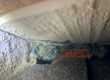
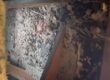
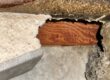
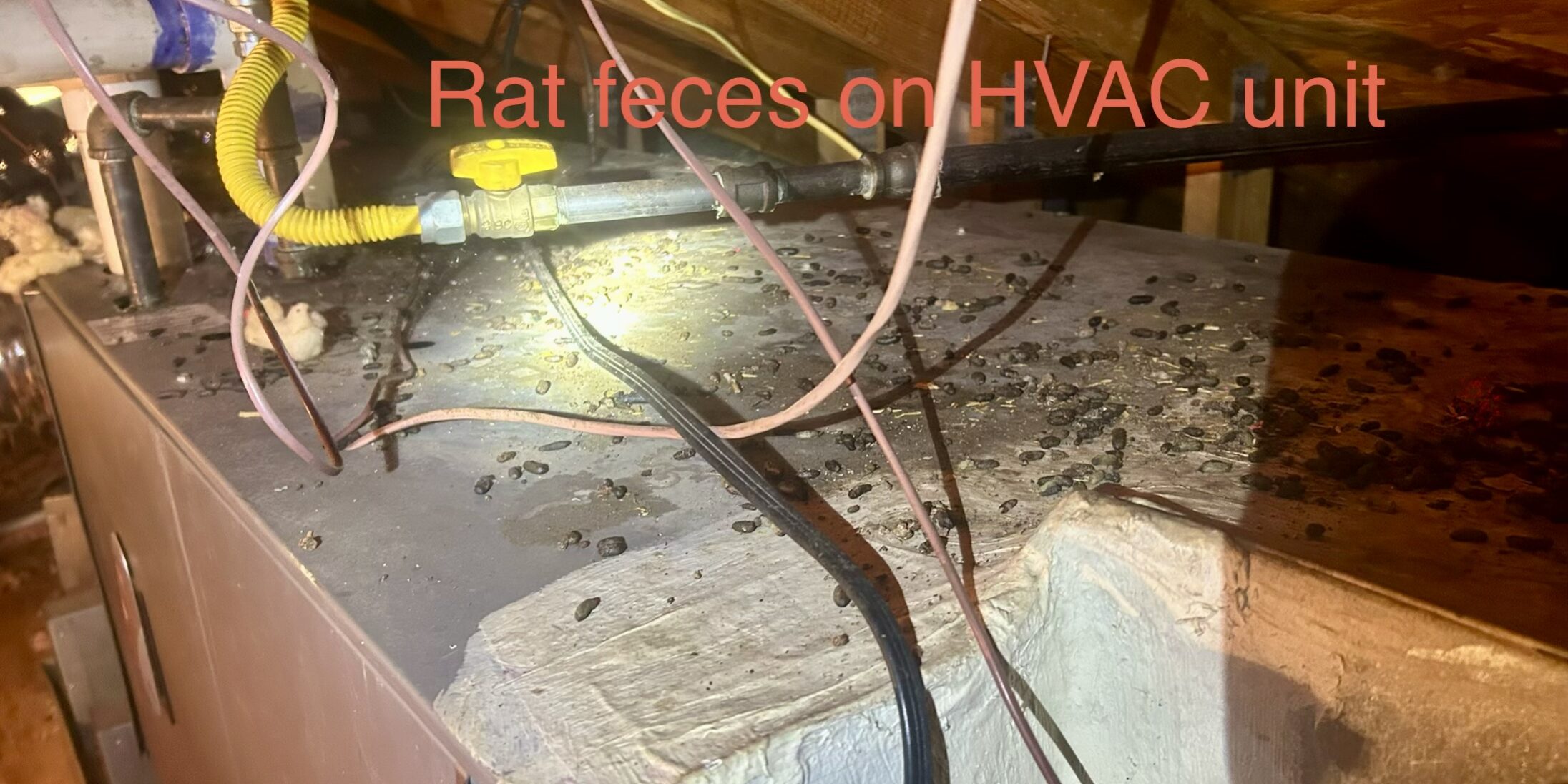
As shown in the photo from the property, rat feces were found directly on top of the HVAC unit. Rat droppings are one of the clearest signs that rodents are actively using an area, and when they are found around HVAC equipment, insulation, framing, ductwork, or other attic components, it can indicate that rats are repeatedly traveling through that part of the attic.
The homeowner’s ceiling noises suddenly made sense. She hadn’t been imagining it, and the sounds were not simply the house settling. Rats really had been moving around directly above the living space.
Why Rats Like Attics
Attics can be extremely attractive to rats because they provide many of the things rodents are looking for: shelter from weather, protection from predators, warmth, quiet nesting areas, and hidden travel routes through a structure. Insulation and other materials can also provide convenient nesting material.
Once rats locate an entry point, they may continue returning to the same area. It also does not necessarily take a large opening for them to get inside. Rats can exploit gaps around roofing, vents, pipes, fascia, soffits, utility penetrations, and other weak points in a structure.
Older homes are not the only properties at risk. Even newer homes can develop small vulnerabilities that provide enough room for rodents to enter, which is why identifying the actual entry point is such an important part of solving the problem.
Rat Removal Is About More Than Setting Traps
Many homeowners initially assume a rat problem can be solved by putting a few traps in the attic. Trapping may be part of the solution, but it does not necessarily address the reason the rats got inside in the first place. If an entry point remains open, more rodents can enter later.
A thorough rodent-control approach should look at the entire structure and determine where the rats are getting inside, how many potential entry points exist, where the rats are traveling once inside, whether insulation or other materials have been damaged, and what repairs or exclusion work may be needed to prevent future activity.
For homeowners dealing with similar activity, a professional rat removal service Cameron Park can inspect the property, identify the source of the problem, and develop a plan that addresses both removal and exclusion.
Why Waiting Can Make a Rat Problem Worse
One of the most important things homeowners should understand about rat activity is that time matters. Rodents are not simply occupying unused attic space. While they are inside, they may be chewing, nesting, contaminating surfaces, and exploring additional parts of the structure.
The longer the problem continues, the greater the opportunity for damage. Rats are rodents, and chewing is a natural part of their behavior. Their teeth continue growing, which means they regularly gnaw on materials to help keep those teeth worn down.
Inside a home, that can include:
- Wood
- Plastic
- Insulation
- Duct materials
- Stored belongings
- Roofing components
- Utility penetrations
- Wires and cables
Not every rat problem results in extensive structural damage, but the risk increases when rodents are allowed to remain inside for longer periods. A noise that begins as occasional scratching can eventually become a larger and more expensive issue.
Evidence Around HVAC Equipment Shouldn’t Be Ignored
In this Cameron Park attic, one of the clearest warning signs was the amount of rat feces found on top of the HVAC unit. Rodents often use elevated or flat surfaces as travel routes, and HVAC equipment can provide convenient areas for movement inside an attic.
The presence of droppings around mechanical systems also highlights why homeowners should not assume that an attic rodent problem is isolated to one corner of the home. Rats may travel throughout the attic while searching for nesting areas, food sources, water, or additional access points.
That means the goal of an inspection should not simply be to find one rat. It should be to understand how the rodents are using the property and what allowed them to get inside.
What Is Wildlife Exclusion?
Exclusion is the process of identifying and securing the places where rodents or wildlife are entering a home. This can involve sealing or repairing vulnerable areas while making sure the animals currently inside are properly removed.
Depending on the property, exclusion work may involve:
- Rooflines
- Soffits
- Fascia boards
- Attic vents
- Plumbing penetrations
- Utility openings
- Gaps around exterior construction
- Damaged roofing components
- Openings around additions or previous repairs
Every home is different, which is why a physical inspection can be so valuable. A homeowner standing on the ground may not be able to see the small gaps that a rodent is using several feet above the roofline, while experienced wildlife-control technicians know where these vulnerabilities are commonly found.
Don’t Ignore Scratching, Chewing, or Running Sounds
It is easy to postpone calling someone when you are not certain there is really an animal inside. However, unusual noises are often the first clue homeowners receive that rodents have entered the structure.
Common warning signs of a possible rat problem include:
- Running or scurrying sounds in the ceiling
- Scratching inside walls
- Chewing or gnawing sounds
- Droppings in attics, garages, or storage areas
- Disturbed insulation
- Unusual odors
- Visible gaps or holes around the exterior
- Pets reacting to certain areas of the wall or ceiling
- Signs of chewing around stored items or building materials
If you are hearing consistent activity, having the property inspected can help determine whether you are dealing with rats, another type of wildlife, or something unrelated. The important thing is not to let the problem continue indefinitely.
The Longer Rats Stay, the More Opportunity They Have to Cause Damage
Homeowners sometimes hope that the animals will simply leave on their own, but an attic can provide a very comfortable environment for rats. If they have easy access and find the space suitable, there may be little reason for them to permanently leave.
They can also reproduce, which can turn a relatively small rodent problem into a much larger one. Meanwhile, contamination and physical damage can continue while the homeowner remains unaware of exactly what is happening above the ceiling.
Early intervention gives homeowners a better opportunity to address the problem before additional repair or restoration becomes necessary. That does not mean every sound in an attic is an emergency, but persistent or repeated signs of animal activity should be investigated.
Why Local Experience Matters
Rodent problems can vary depending on the type of home, surrounding vegetation, roofing design, and other local conditions. A company that regularly handles rat and wildlife problems in El Dorado County is more likely to be familiar with the types of entry points and structural vulnerabilities commonly found in area homes.
For homeowners researching a Cameron Park rat removal company, it is worth looking for a provider that understands removal, exclusion, and the repairs that may be needed after rodents have entered a structure.
The goal should not simply be to make the noises stop for a few nights. The goal should be to determine why the rats are there, how they are getting inside, and what needs to be done to reduce the chances of them returning.
What Happens After the Rats Are Found?
Once rodent activity is confirmed, the next step depends on the property and the extent of the problem. A treatment plan may include a combination of removal, trapping, exclusion, sealing vulnerable openings, repair work, and evaluation of contaminated or damaged attic materials.
Common steps may include:
- Identifying active rodent areas
- Locating exterior entry points
- Removing or trapping rodents
- Performing exclusion work
- Sealing vulnerable openings
- Repairing wildlife-related damage
- Evaluating contaminated attic materials
- Monitoring the property for continued activity
In more extensive cases, attic restoration or structural repair may also be recommended. Each stage addresses a different part of the problem: removal deals with the animals currently inside, exclusion helps prevent new animals from entering, and repairs address the damage left behind.
A Simple Sound Can Be an Important Warning
For this Cameron Park homeowner, the entire process started because she paid attention to an unusual sound. She heard running above her ceiling, researched local rodent-control companies, checked reviews, and scheduled an inspection rather than ignoring the problem.
Within about 20 minutes of arriving, Thomas Wildlife Control & Roofing had identified clear evidence of rat activity inside the attic. The droppings on top of the HVAC equipment confirmed that the rodents were not simply passing through the yard. They had made their way into the home and were actively using the attic.
Fortunately, the homeowner acted before giving the rats even more time to remain inside the structure. That is the takeaway for other El Dorado County homeowners as well.
If you hear scratching, chewing, or running in your ceiling or attic, do not wait weeks or months hoping it disappears. The sooner you identify what is happening, the sooner you can address the animals, locate their entry points, and help prevent additional damage.
A strange noise overhead might seem minor today, but when rats are involved, every additional day can give them more time to chew, nest, contaminate, and move through the structure.