
Bat Removal in Sacramento: Why Bat Exclusion Requires the Right Wildlife Company
When a Sacramento homeowner notices bats flying near the roofline at dusk, the first assumption is often that the animals are simply passing through the neighborhood.
Sometimes they are.
However, when bats repeatedly appear near the same vent, roof return, fascia gap, or opening beneath the eaves, there may be more happening inside the structure.
We recently spoke with a homeowner who had been seeing bats around one side of the house in the evening. At first, the activity did not seem especially concerning. Bats are common throughout the Sacramento area, and seeing them outdoors does not necessarily mean they are living inside a home.
The homeowner became concerned when faint noises started coming from the attic shortly before sunset. A dark stain had also developed near a small opening along the roofline.
Those signs suggested that the bats might not simply be flying over the property. They could be entering and leaving the structure.
What We Look for During a Bat Inspection
When our team inspects a home for bat activity, we are not only looking for an individual bat.
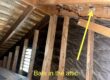
Bats often live together in colonies and may use attics, wall cavities, roof returns, vents, soffits, chimneys, and other protected areas as roosting locations.
During an inspection, we look for evidence such as:
- Bats emerging from the same area around sunset
- Guano below a possible entry point
- Dark staining around gaps or openings
- Sounds coming from the attic or walls
- Openings around vents, fascia, soffits, tiles, or roofing
- Contaminated or disturbed attic insulation
Because bats can use relatively small gaps, the entry point may not be obvious from the ground.
A professional Sacramento bat removal service should inspect the entire structure, identify the primary opening, and locate other gaps that could allow the bats to return.
Why Bat Removal Is Different From Standard Pest Control
Bats are not handled the same way as insects, mice, or common household pests.
Spraying chemicals or placing bait around the property does not correct a bat colony inside an attic. Sealing the first opening you see can also create a more serious problem if bats are still inside the structure.
They may become trapped in the attic, enter the living space, or search for another way out through walls, vents, or ceilings.
Effective bat removal in Sacramento usually requires a planned exclusion process rather than conventional extermination.
That is one reason it is important to work with a qualified wildlife company that understands bat behavior, exclusion procedures, structural entry points, and attic contamination.
Thomas Wildlife Control & Roofing is one of the few companies in the area licensed to perform bat removal. You can learn more about the company’s specialization in Why Thomas Wildlife Control & Roofing Is Your Best Choice for Bat Removal.
How One-Way Bat Exclusion Works
The goal of bat exclusion is to allow the bats to leave the structure without allowing them to come back inside.
After the building has been inspected, secondary gaps and potential entry points are sealed. The primary active opening is temporarily fitted with a one-way exclusion device.
This device allows bats to exit when they leave the roost to feed, but it prevents them from reentering through the same opening.
The property must then be monitored to make sure the bats have left before the final opening is sealed.
A proper exclusion plan may include:
- Identifying the active roosting area
- Locating the primary entrance and secondary gaps
- Sealing inactive openings around the structure
- Installing a one-way exclusion device
- Monitoring the property for continued activity
- Removing the device after the bats have exited
- Permanently sealing the final opening
This process must be carefully timed and performed correctly. A knowledgeable bat removal company in Sacramento will evaluate the circumstances before deciding when and how the exclusion should be completed.
Sealing the Entry Point Is Essential
Getting bats out of an attic is only part of the solution.
If the roofline gaps, vents, soffits, fascia openings, or construction gaps remain accessible, the colony may return or another group of bats may eventually use the same location.
That is why structural exclusion is such an important part of bat work.
Depending on the condition of the home, the work may require:
- Sealing narrow roofline gaps
- Screening or repairing vents
- Closing openings around soffits and fascia
- Repairing loose or damaged roofing materials
- Sealing construction gaps
- Reinforcing areas that could become future entry points
Because Thomas Wildlife Control & Roofing handles both wildlife exclusion and structural repairs, our team can address the opening rather than simply removing the animals and leaving the home vulnerable.
What Happens to the Guano Left in the Attic?
Removing and excluding the bats does not automatically correct the contamination they may have left behind.
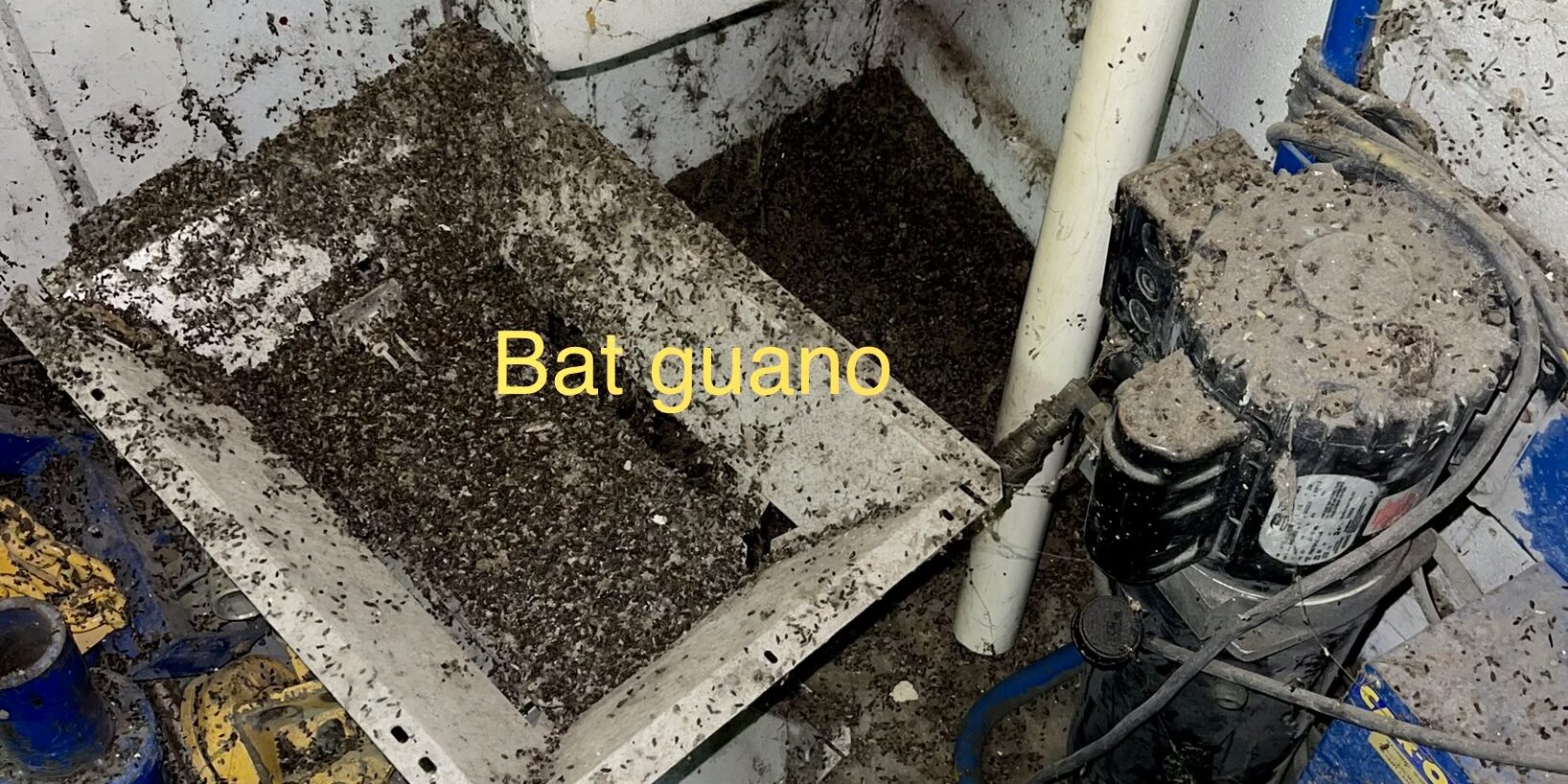
Bat droppings, commonly called guano, can accumulate beneath roosting areas. Urine and guano may contaminate insulation, create strong odors, stain building materials, and affect the overall condition of the attic.
Disturbing accumulated guano without proper protective equipment can also release contaminated dust into the air.
Depending on the amount of activity and the condition of the attic, cleanup may involve:
- Removing accumulated guano
- Removing contaminated insulation
- Sanitizing affected surfaces
- Treating odors
- Evaluating damaged building materials
- Installing replacement insulation
- Repairing stained or deteriorated areas
Our attic cleanup and insulation replacement services can help restore areas that have been affected by wildlife contamination.
Cleanup needs vary from one home to another. A small roost discovered early may require limited work, while a colony that has occupied an attic for an extended period can leave behind more extensive contamination.
Why Homeowners May Not Notice the Colony Right Away
Bat colonies can remain hidden for a long time.
Attics are usually dark, quiet, and rarely visited by homeowners. The bats may leave at dusk and return before most people are awake, allowing the activity to continue without being noticed.
Some homeowners first discover the problem after:
- Seeing bats exit the roofline at sunset
- Finding guano on the ground or roof below an opening
- Hearing movement in the attic
- Noticing an unexplained odor
- Finding staining around a vent or fascia gap
- Having a bat enter the living area
Our article, Bats in the Attic: One Homeowner’s Unexpected Discovery, provides another example of how bat activity can remain hidden until the signs become difficult to ignore.
Bat Removal for Sacramento County Homes
Homes throughout Sacramento County can provide bats with protected areas for roosting.
Roof returns, attic vents, gaps beneath roofing materials, soffits, fascia boards, wall cavities, and other small openings may offer access to the structure.
The correct solution should address the entire problem:
- Inspect the home
- Identify the bat activity
- Locate all entry points
- Exclude the bats humanely
- Seal the structure
- Remove guano and contaminated material when needed
- Repair damage caused by the activity or entry point
Simply removing a bat that entered a room does not necessarily determine whether additional bats are living elsewhere in the home.
Do You Suspect Bats Are Living in Your Home?
Seeing bats outdoors does not always indicate a problem. However, repeated activity around the same part of the roof, guano beneath an opening, attic noises, staining, or a bat inside the living space should be investigated.
Thomas Wildlife Control & Roofing provides professional bat inspections, exclusion, entry-point sealing, attic cleanup, insulation replacement, and structural repair services throughout Sacramento County.
Our inspections are paid and are designed to determine where the bats are entering, where they may be roosting, what contamination or damage is present, and what work is needed to resolve the problem.
To request an inspection, contact Thomas Wildlife Control & Roofing or call 916-500-9027.