
You’re lying in bed, the house is quiet, and suddenly you hear scratching above the ceiling. Maybe it’s a quick scurrying sound. Maybe something seems to be moving around inside a wall. At first, you wonder whether it’s just the house settling. But when the noises return the following night, you start thinking about rats.
For homeowners searching for Rat Removal Roseville, these nighttime sounds are often the first warning that rodents may be living inside the home.
At Thomas Wildlife Control & Roofing, we help homeowners identify and address wildlife activity inside attics, walls, roofs, and crawlspaces throughout Roseville and the surrounding Placer County area.
Rats can damage insulation, chew building materials, and leave contamination behind. Understanding the warning signs can help you recognize a problem before it becomes more extensive.
Here’s what to look for, how to confirm activity, and what to expect from professional rat removal.
1. Why Scratching Noises at Night Could Mean Rats in Your Attic
Rats are generally most active after dark, which explains why homeowners often hear them when the household settles down for the evening.
During the day, televisions, appliances, traffic, and everyday activity can make it difficult to notice movement overhead. At night, even a small animal moving across attic framing can sound surprisingly loud.
What Do Rats Sound Like in a Ceiling?
Common sounds associated with rats include:
- Scratching: Repeated scraping as rats move through insulation or along building materials.
- Scurrying: Quick footsteps across attic framing, ceiling areas, or inside walls.
- Gnawing: Persistent chewing sounds, sometimes coming from the same location.
- Rustling: Movement through loose insulation or nesting material.
- Occasional squeaking: High-pitched sounds that may occur when rats interact.
The location and timing of these noises can offer useful clues.
For example, scratching directly above a bedroom ceiling may indicate activity in the attic. Sounds that seem to travel vertically could suggest movement within a wall cavity.
However, noises alone cannot confirm a rat infestation. Mice and squirrels can produce similar sounds, making proper identification important.
Why Roseville Homes Can Experience Rat Problems
Roseville is Placer County’s largest city, with neighborhoods ranging from older homes near downtown to newer subdivisions on the west side.
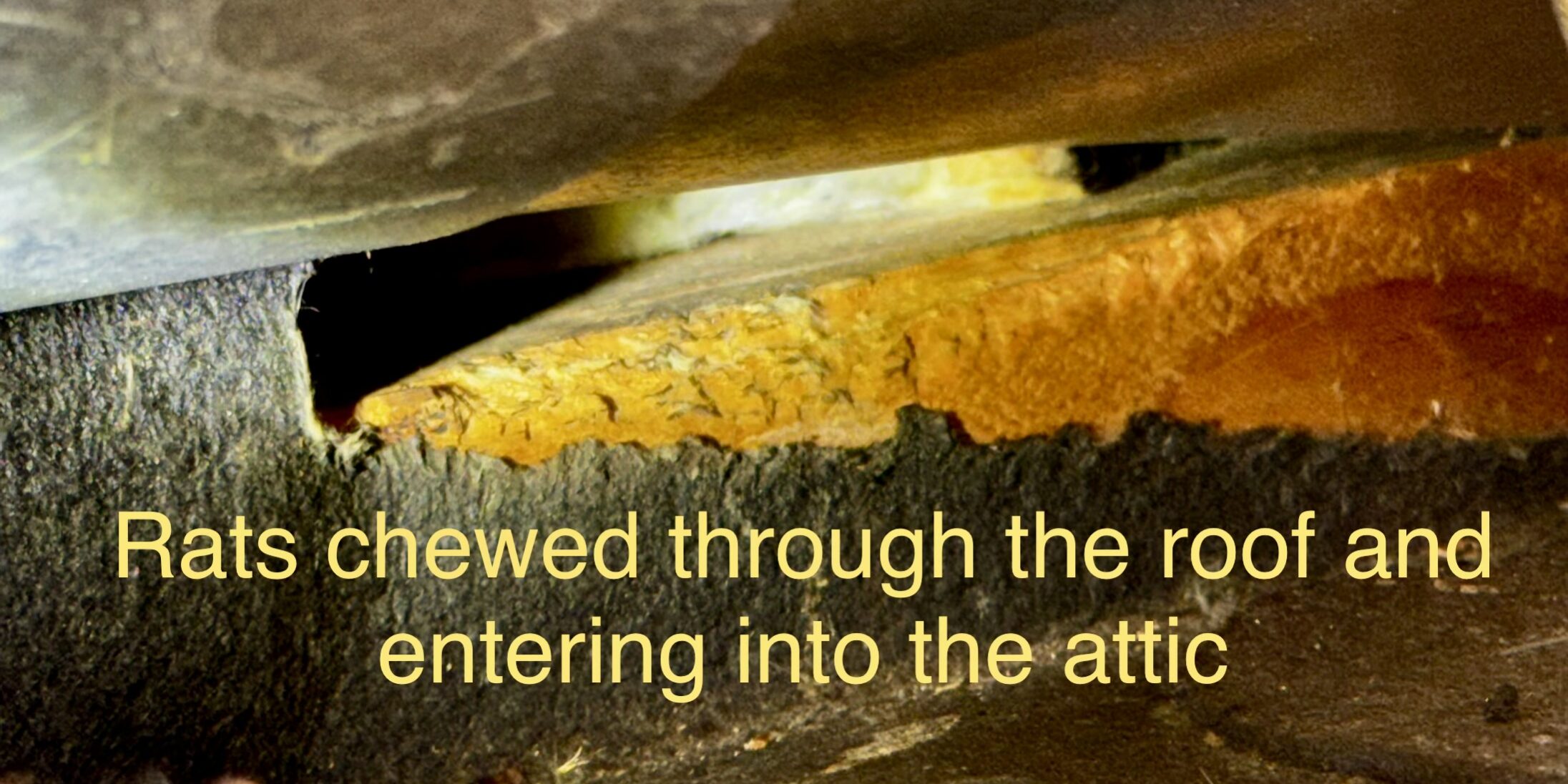
Older houses may have aging roof vents, deteriorating exterior materials, or gaps around utility penetrations. Newer houses can also develop openings around roof transitions, vents, and other construction features.
Rats don’t necessarily need a large, obvious hole to enter. A relatively small opening along a roofline or around an exterior pipe may provide access to an enclosed space. That’s why nighttime scratching deserves attention, regardless of whether your house is decades old or relatively new.
2. Five Common Signs of Rats in Attics and Walls
Scratching noises are one clue, but several additional warning signs can help homeowners recognize possible rodent activity.
At Thomas Wildlife Control & Roofing, identifying these signs is an important part of understanding where animals may be living and what damage needs attention.
1. Droppings in Attics or Crawlspaces
Rat droppings are typically dark, elongated, and larger than mouse droppings.
They may appear along attic framing, near insulation, in crawlspaces, or around frequently traveled routes inside enclosed areas.
Fresh droppings may look darker and somewhat shiny, while older droppings can become dry and dull. However, appearance alone cannot reliably establish when they were deposited.
If you encounter droppings, avoid sweeping or vacuuming them while dry. Disturbing rodent waste can release contaminated particles into the air.
The Centers for Disease Control and Prevention recommends appropriate disinfecting and wet-cleaning procedures when addressing rodent contamination.
Extensive contamination is generally best assessed by trained professionals.
2. Gnaw Marks on Wood and Other Materials
Rats have continuously growing front teeth and regularly gnaw on materials.
Inside a home, this activity may leave visible marks on:
- Wooden attic framing
- Plastic piping
- Stored materials
- Insulation coverings
- Electrical wiring and protective sheathing
Chewed electrical wiring is particularly concerning because damaged insulation can increase fire risk.
If you discover exposed or damaged wiring, avoid touching it and arrange for a qualified electrician to evaluate the affected area.
3. Dark Rub Marks Along Travel Routes
Rats often follow established routes along walls, framing, and other structural surfaces.
As they repeatedly move through narrow spaces, oils and dirt from their fur can leave dark smudges.
These marks may appear along attic beams, around access openings, or near gaps connecting different parts of the home.
A dark streak alone doesn’t prove rats are present, but it becomes more meaningful when accompanied by droppings, gnawing, or nighttime activity.
4. Disturbed Insulation and Nesting Materials
Attic insulation provides secluded spaces where rats may build nests.
Depending on the material, rats can disturb loose insulation, compress sections of it, or create pathways through it.
Nesting material may include shredded paper, soft debris, and pieces of insulation.
An attic inspection might reveal unusual tunnels, compressed insulation, or accumulations of shredded material.
Beyond indicating rodent activity, these findings can also reveal areas requiring cleaning or insulation replacement.
5. Unusual Odors
A persistent musky or urine-like odor may develop when rats occupy an enclosed space.
Odors can become more noticeable when contamination accumulates in insulation or other building materials.
A particularly unpleasant smell could also indicate that an animal has died inside a wall or another inaccessible area.
Because household odors have many possible causes, smell should be considered alongside other physical evidence.
3. How to Confirm Whether Rats Are Living Inside Your Home
Hearing something overhead can be unsettling, but the next step should be gathering evidence rather than immediately attempting to capture an animal.
A careful inspection can help determine what’s happening and where the activity may be concentrated.
Start With What You Can Safely Observe
Begin by writing down when and where you hear noises.
Consider these questions:
- Does the scratching happen primarily after sunset?
- Is the sound concentrated above one room?
- Does the activity appear to move between the ceiling and walls?
- Have you noticed droppings near an accessible attic or crawlspace opening?
- Has the sound become more frequent?
Keeping a simple record can help a wildlife professional narrow down potential activity areas.
If your attic has a safe, accessible entrance, you may be able to observe visible damage from that opening.
Avoid walking on exposed ceiling drywall, disturbing insulation, or entering cramped areas with questionable footing.
Check for Potential Entry Openings
Exterior openings associated with the house deserve attention, especially around the roof and foundation.
Possible entry points include damaged vents, gaps around roof penetrations, deteriorating fascia, and openings around plumbing or utility lines.
However, finding an opening doesn’t mean you should immediately seal it.
If rats are still inside, closing their access point could trap them in the attic or walls, potentially creating additional damage and odors.
When Professional Inspection Makes Sense
If multiple signs suggest an infestation, Thomas Wildlife Control & Roofing provides rat removal roseville homeowners can turn to for help with identifying wildlife activity and addressing access points.
A professional inspection should evaluate more than the location of the scratching.
It should also consider nesting areas, damaged insulation, travel routes, and structural openings that may allow additional rats to enter.
Understanding the complete problem makes it easier to develop an effective removal and repair plan.
4. Why Rats in an Attic Shouldn’t Be Ignored
A few nights of scratching might seem like a minor inconvenience, particularly if the sounds eventually stop.
But the absence of noise doesn’t necessarily mean the animals have left.
Rats can remain hidden during parts of the day, change their activity patterns, or move into different enclosed spaces.
Meanwhile, damage and contamination may continue.
Damage to Insulation
When rats create pathways or nesting spaces inside attic insulation, the material can become compressed or displaced.
This may reduce its effectiveness in affected areas.
Urine and droppings can also contaminate insulation, sometimes making removal and replacement necessary.
The extent of the damage depends on how much of the space has been affected.
Electrical and Structural Concerns
Rats may gnaw on wiring, plastic materials, and wood.
Damaged electrical insulation can create safety hazards, while chewed plumbing components can contribute to leaks.
Although not every infestation causes significant structural damage, these possibilities make investigating suspected activity important.
Sanitation and Indoor Air Concerns
Rodent droppings, urine, and nesting materials can contaminate enclosed building spaces.
Some rodent-associated diseases can be transmitted through contact with contaminated materials or exposure to particles disturbed during improper cleanup.
Not every infestation presents the same health risk, but homeowners should avoid handling rodent waste without suitable precautions.
At Thomas Wildlife Control & Roofing, our approach considers the condition of affected areas along with the need to remove the animals and prevent their return.
Activity Can Extend Into Other Areas
Rats can use connected wall cavities, attic sections, and structural openings to move through a building.
Activity that initially seems limited to one bedroom ceiling may involve additional areas.
Addressing the problem early can help limit further damage and identify the repairs necessary to secure the home.
5. How Thomas Wildlife Control & Roofing Approaches Rat Removal Roseville
Effective rat removal involves more than catching an animal and assuming the problem is solved.
At Thomas Wildlife Control & Roofing, we focus on identifying the source of the problem, removing unwanted wildlife, securing entry points, and addressing damage associated with the intrusion.
Our approach brings together wildlife removal and building repairs so homeowners can address the underlying issue rather than just the immediate noise.
Step One: Inspect the Attic, Walls, and Entry Points
The first step is identifying where rats are active and how they’re entering the structure.
This may involve inspecting accessible attic spaces, crawlspaces, roof vents, and other building features.
Signs of contamination, nesting activity, and possible damage help determine what work may be necessary.
Step Two: Humanely Trap and Remove Rats
Once active rats have been identified, an appropriate trapping and removal plan can be developed for the affected enclosed areas.
Removal efforts should focus on the attic, crawlspace, or other structural space where the infestation has been confirmed.
The methods used should be appropriate for the animals involved and consistent with applicable regulations.
For questions about California wildlife rules, homeowners can consult the California Department of Fish and Wildlife.
Step Three: Seal the Entry Points
After active animals have been addressed, preventing further entry becomes a priority.
This process, known as exclusion, may involve:
- Securing damaged roof vents
- Closing gaps around utility penetrations
- Repairing deteriorating fascia
- Installing rodent-resistant barriers
- Addressing openings around crawlspace structures
Because Thomas Wildlife Control & Roofing also performs roofing repairs, we can address relevant roof-related damage as part of the broader wildlife removal process.
The objective is to correct the openings that allowed animals into the home.
Step Four: Clean and Restore Affected Areas
After removal, affected spaces should be evaluated for droppings, urine, nesting debris, and damaged insulation.
Depending on the conditions, restoration may involve removing contaminated materials, cleaning suitable surfaces, and replacing insulation.
Not every infestation requires extensive restoration. The work should reflect the actual damage and contamination found during inspection.
Step Five: Repair Wildlife-Related Damage
The final step is addressing damaged building components.
This may include roof repairs, vent replacement, exclusion barriers, or insulation restoration. Electrical damage should be evaluated and repaired by a qualified electrician.
Homeowners seeking rat control and removal roseville services benefit from understanding how animal removal, exclusion, cleanup, and repair fit together.
At Thomas Wildlife Control & Roofing, our goal is to help homeowners address the intrusion and the conditions that made it possible.
6. Choosing a Roseville Rat Removal Company and Preventing Repeat Problems
When rats are suspected inside your home, choosing an experienced wildlife removal professional matters.
A Roseville Rat Removal Company should be able to explain how it identifies active animals, handles removal, locates entry points, and determines which repairs are necessary.
Before scheduling work, ask whether the inspection includes both the affected interior space and exterior openings associated with the building.
It’s also worth asking how contaminated insulation is handled, what exclusion repairs are recommended, and whether roofing damage can be addressed.
Why Removal and Repair Should Work Together
One of the advantages of working with Thomas Wildlife Control & Roofing is our ability to handle wildlife-related roof repairs alongside animal removal and exclusion.
For example, removing rats from an attic may not solve the problem if a damaged roof vent remains accessible.
Likewise, repairing an opening without first addressing animals inside can create new problems.
Coordinating removal and building repairs helps establish a more complete solution.
Practical Steps to Reduce Future Problems
Once the infestation has been addressed, routine maintenance can reduce the chance of another intrusion.
Homeowners should periodically:
- Check roof vents for visible damage
- Repair deteriorating fascia and exterior materials
- Keep attic and crawlspace access panels secured
- Address gaps around utility penetrations
- Investigate recurring scratching or movement sounds
Even newer homes can develop entry openings over time.
Homeowners comparing Rat Removal Services Roseville providers should prioritize a thorough inspection, an appropriate removal plan, and durable exclusion repairs rather than a temporary fix.
Frequently Asked Questions About Rats in Roseville Attics
1. How can I tell whether scratching in my ceiling is rats or mice?
Rats may produce heavier scurrying and gnawing sounds than mice, but sound alone isn’t reliable for identification.
Dropping size, gnaw marks, nesting evidence, and inspection findings can help distinguish between them.
Thomas Wildlife Control & Roofing can inspect accessible areas to help determine which animals may be responsible.
2. Can rats get into a newer home in Roseville?
Yes. Newer homes can have gaps around vents, roof connections, utility penetrations, and other structural features.
Rats need an accessible opening, not an old house. Both newer and older homes can experience attic and wall intrusions.
3. Should I seal an attic opening as soon as I find it?
Not until you know whether animals are still inside and have an appropriate removal plan.
Closing an active entry or exit point prematurely can trap rats inside the building.
Animals should be addressed before exclusion repairs are completed.
4. Do I need to replace all my attic insulation after rats?
Not necessarily.
The decision depends on the amount of contamination, the condition of the insulation, and how widely the activity has spread.
An inspection can help determine whether targeted cleaning is appropriate or more extensive insulation replacement is necessary.
Conclusion: Get Help With Rat Removal in Roseville Before the Damage Grows
Hearing scratching above your ceiling doesn’t automatically mean you have rats, but it’s a warning sign worth investigating.
Droppings, gnaw marks, disturbed insulation, unusual odors, and repeated nighttime movement can provide additional evidence.
For homeowners looking into Rat Removal Roseville, the most effective approach combines proper identification, humane removal, entry-point sealing, and cleanup or repair of affected areas.
Thomas Wildlife Control & Roofing helps Roseville and surrounding Placer County homeowners address unwanted wildlife inside attics, walls, roofs, and crawlspaces.
Our combination of wildlife removal, exclusion, and roofing repair services allows us to address both the animals and the building damage associated with their entry.
If you’re hearing scratching in the ceiling or suspect rats have entered your home, contact Thomas Wildlife Control & Roofing to schedule a professional inspection and find out what steps are needed to remove the animals and secure your home.